Dec. 24, 2025
When it comes to reliable waterproof clothing, PU rainwear has become one of the most popular choices across industries and daily life. From industrial worksites and logistics yards to outdoor commuting and leisure activities, PU rainwear offers a strong balance of waterproof performance, durability, comfort, and cost-effectiveness. In this guide, we’ll explore what PU rainwear is, how it works, its key benefits, applications, and how to choose the right PU rainwear for your needs.
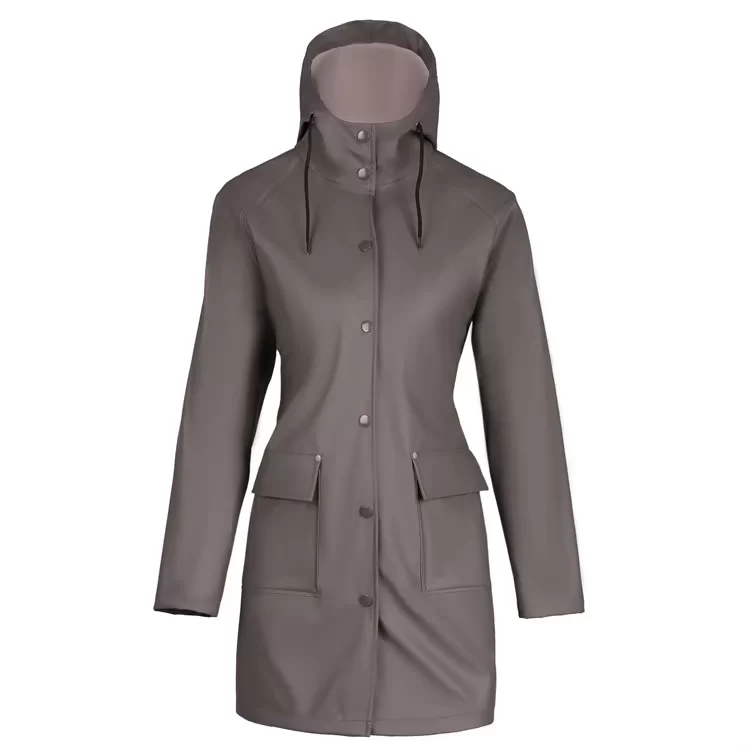
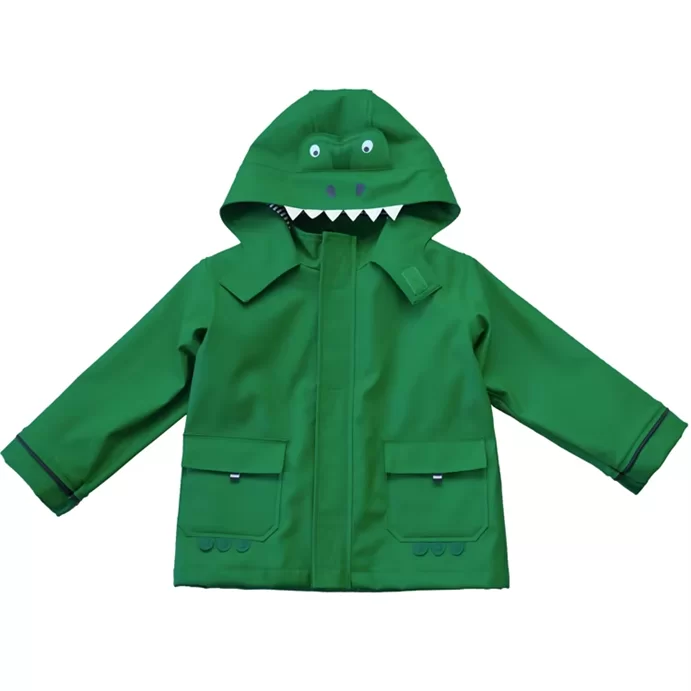
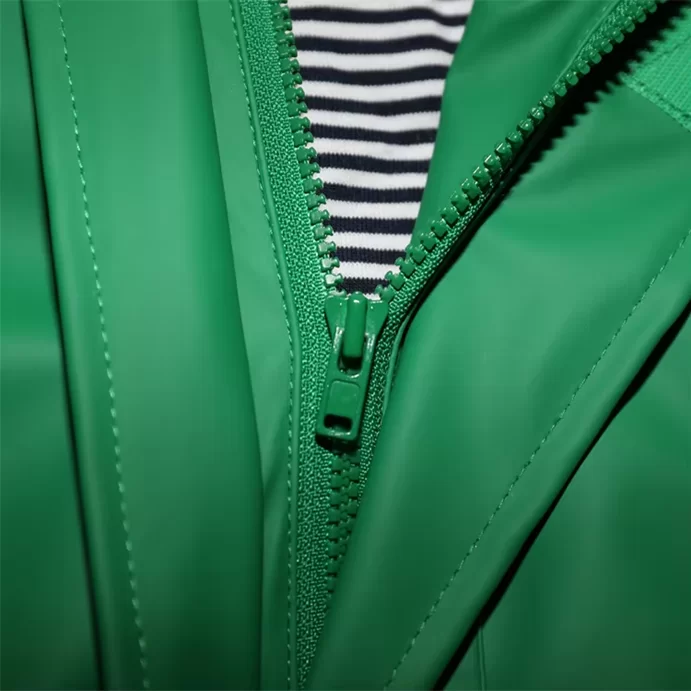
PU rainwear refers to waterproof garments made using polyurethane (PU) coating or lamination applied to a base fabric such as polyester or nylon. The PU layer forms a continuous waterproof barrier that prevents rain, wind, and moisture from penetrating the fabric, while still allowing a certain level of flexibility and comfort.
Unlike traditional PVC rainwear, PU rainwear is generally lighter, softer, and more breathable, making it suitable for long-term wear. This is why PU rainwear is widely used in workwear, safety clothing, outdoor apparel, and even fashion raincoats.
The waterproof performance of PU rainwear comes from its polyurethane coating, which is either:
Coated on the fabric surface, or
Laminated as a thin PU membrane bonded to the textile.
This PU layer blocks water molecules while resisting wind penetration. Many PU rainwear products also feature:
Sealed or taped seams to prevent leakage at stitching points
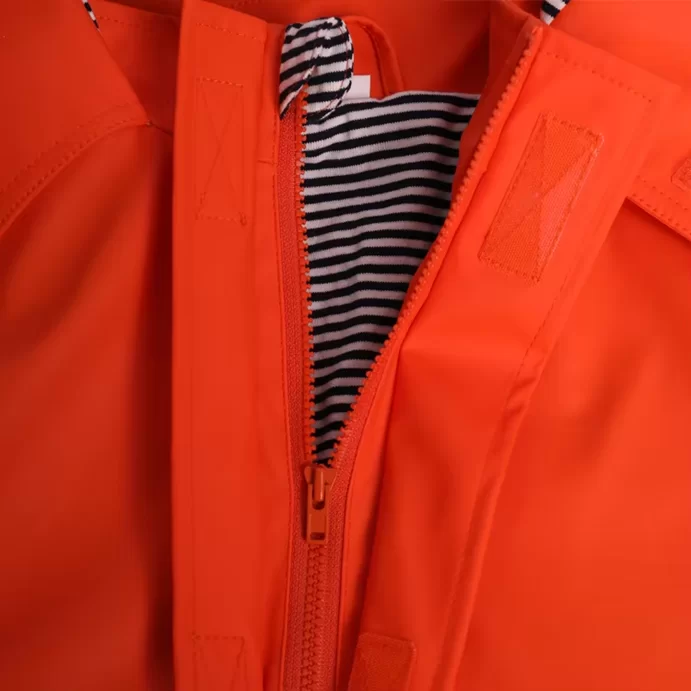
Water-resistant zippers and storm flaps
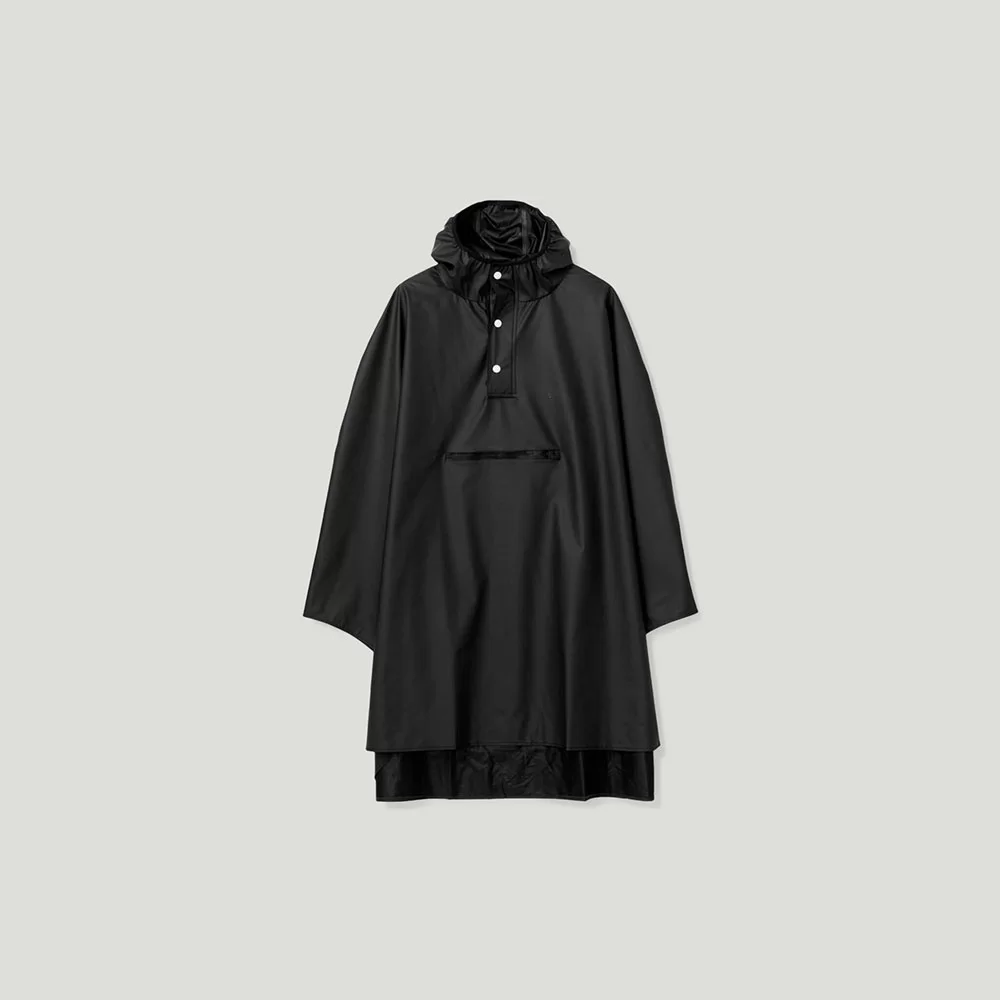
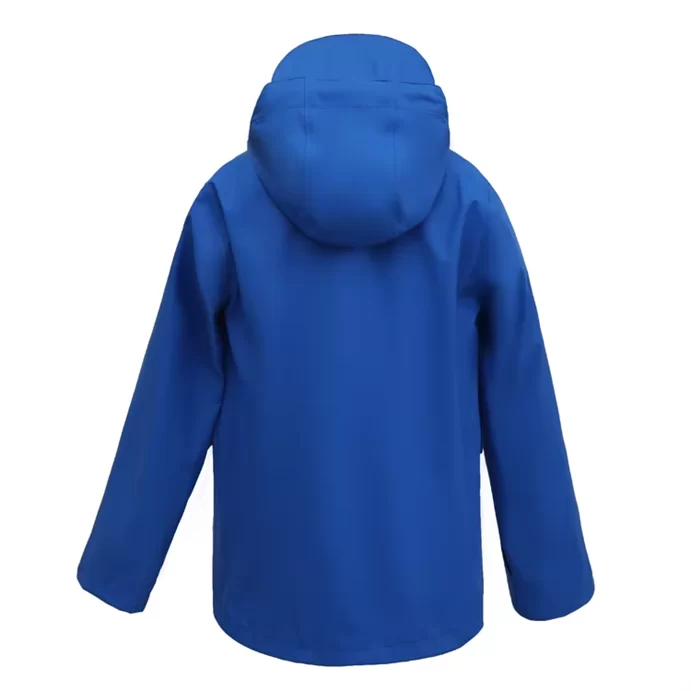
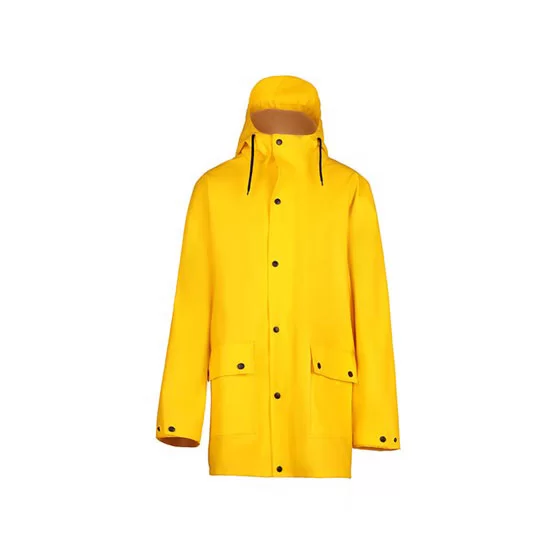
Adjustable cuffs, hoods, and hems for improved protection
As a result, PU rainwear provides consistent waterproofing even during heavy rainfall.
PU rainwear typically achieves high waterproof ratings, making it suitable for moderate to heavy rain conditions. It effectively keeps the wearer dry during prolonged exposure to wet environments.
Compared to PVC rainwear, PU rainwear is lighter and more flexible, reducing stiffness and noise during movement. This is especially important for workers who need to bend, walk, or operate equipment for long hours.
Many modern PU rainwear fabrics are designed with enhanced moisture vapor transmission, helping reduce sweat buildup and improving overall comfort.
PU-coated fabrics are resistant to tearing, abrasion, and wear, making them ideal for demanding work environments such as construction, logistics, agriculture, and fisheries.
PU rainwear is often considered a more eco-conscious alternative to PVC, as it typically contains lower levels of harmful plasticizers and offers better compliance with environmental regulations.
PU rainwear is widely used across multiple sectors due to its versatility:
Industrial Workwear: Construction, mining, road maintenance, and utilities
Logistics & Warehousing: Outdoor loading, unloading, and transportation
Agriculture & Fisheries: Farming, aquaculture, and marine operations
Outdoor Activities: Hiking, cycling, fishing, and camping
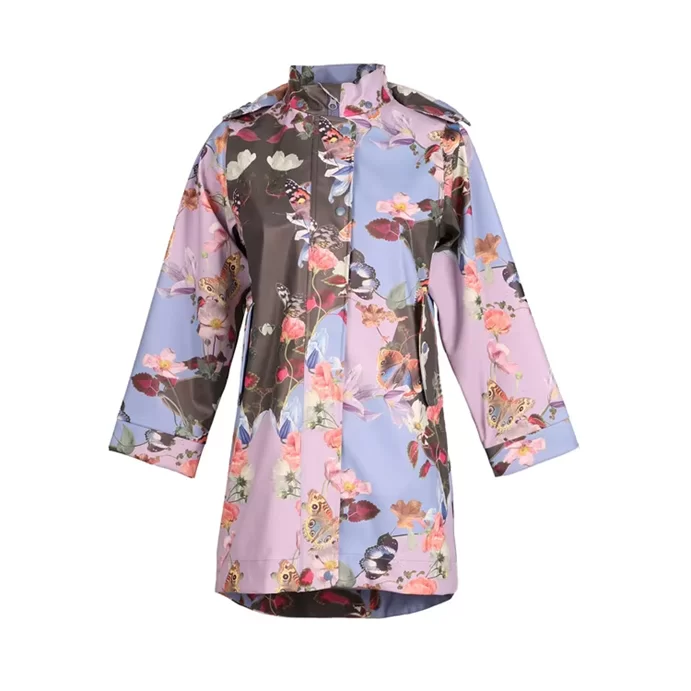
Everyday Use: Urban commuting, school raincoats, and casual rain jackets
Because of its balance between performance and comfort, PU rainwear works well in both professional and daily scenarios.
A common comparison in waterproof clothing is PU rainwear vs PVC rainwear. While both offer waterproof protection, PU rainwear stands out in several areas:
Comfort: PU rainwear is softer and less rigid
Weight: PU is generally lighter than PVC
Breathability: PU allows better moisture management
Flexibility in Cold Weather: PU remains flexible in lower temperatures
PVC rainwear, on the other hand, may offer higher chemical resistance and is sometimes used in specific heavy-duty environments. However, for most applications, PU rainwear provides a more comfortable and user-friendly solution.
When selecting PU rainwear, consider the following factors:
Look for information on waterproof performance, especially if you work in heavy rain or wet environments.
Heavier PU rainwear offers better durability, while lighter options are more suitable for daily wear and mobility.
Fully taped or welded seams significantly improve waterproof reliability.
Choose designs with adjustable hoods, cuffs, and ventilation features for better comfort and protection.
For workwear, ensure the PU rainwear meets relevant safety or protective clothing standards, especially for high-risk environments.
Proper care can significantly extend the lifespan of PU rainwear:
Clean with mild detergent and cold water
Avoid harsh chemicals and fabric softeners
Do not expose to excessive heat or direct sunlight for long periods
Hang dry instead of machine drying
Following these simple steps helps maintain the waterproof coating and overall performance.
PU rainwear combines waterproof reliability, comfort, durability, and affordability, making it a smart choice for both businesses and individuals. Whether you need protective clothing for industrial operations or a dependable rain jacket for everyday use, PU rainwear offers a practical solution that performs well in real-world conditions.
As technology continues to improve, modern PU rainwear is becoming even lighter, more breathable, and more sustainable—ensuring it remains a leading option in the global waterproof apparel market.
Hit enter to search or ESC to close